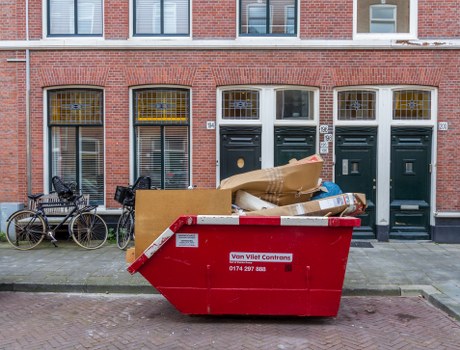
House Clearance & Sustainability: Responsible Clearance for Homes
House clearance is more than removing items from a property ??? it is an opportunity to reduce landfill, support local communities and lower carbon emissions. In our approach to home clearance we prioritise reuse, recycling and careful sorting at every stage of the process. By treating every job as a chance to recover materials and divert them into circular channels, our residential clearance practice reduces environmental impact while helping neighbours and charities.
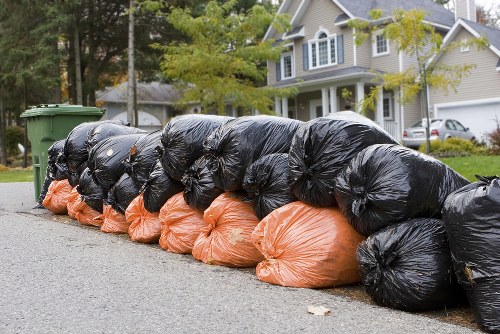
Our work is informed by local boroughs' approaches to waste separation, which typically require separation of dry recyclables, glass, food and mixed residual waste. We align house-clearance collections with these local rules where possible, pre-sorting items on site so that glass, paper, plastics, metals, textiles and food-contaminated materials follow the same streams used by municipal services. This careful on-site segregation increases the proportion of material that can be sent to transfer stations, community reuse centres and specialist recyclers.
Recycling Percentage Target and Reporting
We have set a clear recycling percentage target for our clearances: to recycle or reuse 85% of all recoverable material by 2028. This target covers furniture, appliances, metals, timber, textiles and electronic waste recovered during house clearances. To achieve and track this ambition we record weights for each stream, report annually on performance, and work with local transfer stations to verify onward destinations. Our target is ambitious but achievable through rigorous sorting, partnerships and continuous improvement.
Key streams we consistently recover include:
- Metalwork and scrap metals (valuable for recycling)
- Furniture and mattresses suitable for reuse or refurbishment
- White goods and WEEE (recycled or responsibly processed)
- Wood suitable for chipping and biomass use
- Textiles and clothing redirected to charity or textile recyclers
Partnerships with Charities and Local Reuse Organisations
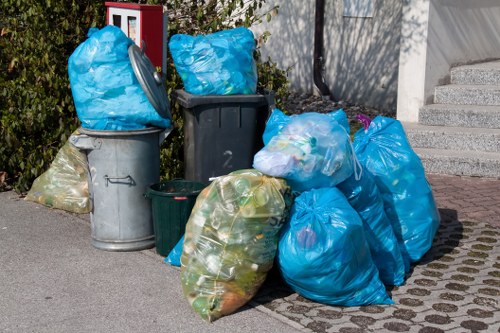
Strong partnerships with charities are central to our reuse-first philosophy. We work with local furniture charities, social enterprises and community groups to donate good-quality items recovered during a clearance. Items that cannot be reused directly are often given to community upcycling projects or diverted to vocational training organisations that repair and refurbish for resale. These relationships not only reduce waste but also create social value ??? supporting people in need and funding local services.
When operating across multiple boroughs we maintain a directory of approved charity partners and community hubs, ensuring that donations comply with local acceptance policies. Where charities cannot accept items, we prioritise accredited reprocessors and specialist recyclers at local transfer stations who can handle complex streams safely and transparently.
Local Transfer Stations and Responsible Routing
Local transfer stations and civic amenity sites play a vital role in our waste logistics. After initial on-site segregation, materials are taken to nearby transfer facilities where further consolidation, bulking and onward transport to specialist processors occurs. Using local transfer stations reduces mileage, keeps journeys short and speeds up turnaround ??? all contributing to our carbon-reduction goals. We also ensure that hazardous or regulated wastes are delivered only to authorised facilities and are accompanied by required documentation.
![A blue skip situated outdoors on a compacted gravel surface, filled with assorted rubbish including yellow and green plastic bags, cardboard boxes, and various discarded items. Some waste has spilled onto the ground around the skip, which is positioned near a rural road with a gentle curve, bordered by a sparse strip of dirt and scattered dry grass. In the background, there is a dense line of pine trees under a clear, light blue sky, indicating a natural environmental setting typical of the outskirts of a town or countryside area. The scene appears to be a temporary disposal site, consistent with rubbish removal services provided by companies like House Clearance, operating within the local area, potentially near [POSTCODE] or in a nearby town, reflecting a typical context of waste collection or clearance activity.](/pub/_photos/rubbish/f1344274432.jpg)
The fleet used for our house clearance services reflects our sustainability commitments. We operate a mix of low-carbon vans including electric and modern hybrid vehicles, chosen for payload efficiency and reduced tailpipe emissions. Route optimisation software minimises empty running and unnecessary detours, lowering overall fuel use. For larger removals we use vehicles with improved fuel economy and, where possible, biofuel blends to further reduce lifecycle emissions. Every journey is planned to combine jobs in a way that limits miles while meeting client schedules.
Transparent monitoring underpins our environmental approach: we track vehicle miles, fuel type, payload efficiency and diversion rates from landfill. This data feeds into annual sustainability reviews and helps us refine operations, supplier choices and partnership arrangements to better meet our recycling targets.
In practice, a typical residential clearance uses a layered approach: initial assessment and triage on-site; segregation of reusable items for charity donation; separation of recyclable materials for onward transfer; and safe handling of hazardous components like batteries, fluorescent tubes and electronic waste. This methodology is compatible with borough-level separation schemes ??? for example, placing glass and mixed paper into approved containers, and ensuring food-soiled materials are channelled appropriately.
Our commitment extends beyond operational measures. We conduct staff training in waste classification, safe manual handling and low-emission driving, and we audit suppliers and transfer stations to confirm that recovery, recycling and disposal meet regulatory and ethical standards. Strong governance ensures that house clearances deliver environmental benefits rather than simply shifting waste between contractors.
In summary, our house clearance and residential clearance services combine an 85% recycling and reuse target, close cooperation with local charities, efficient use of transfer stations and a low-carbon vehicle fleet. We see every clearance as a chance to divert materials from landfill, support the local circular economy and reduce greenhouse gas emissions while providing a respectful, professional service for clients clearing properties.